

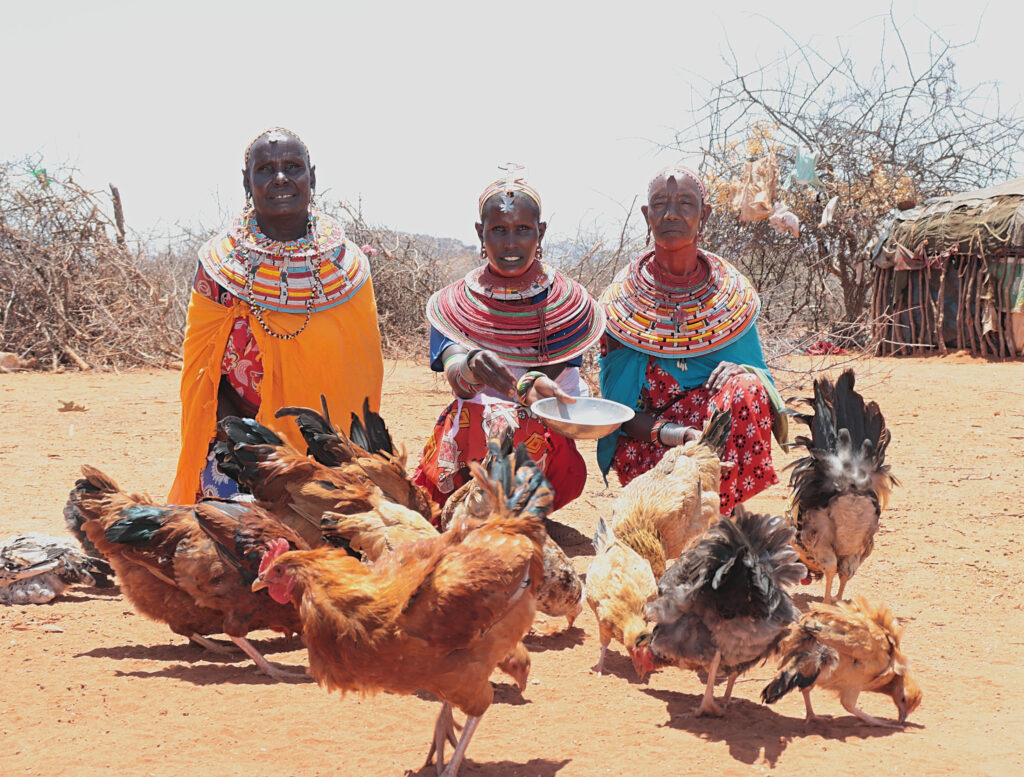
From Left to right: Chure Lenaiyaja, Yanike Noosurai, and Kirasi Lenaiyas
A mother’s hope often begins with a small change, a fuller plate, a child who eats better, a business that finally grows. For the women of Naasieku Business Group in Isiolo County, that change began with Lishe Bora.
Lishe Bora is part of BOMA’s REAP for Nutrition program, designed to support infants, young children, and pregnant or breastfeeding women in communities where chronic malnutrition is high. The program runs for 16 months and is funded by Sint Antonius Stichting Project (SAS-P), the Godley Family Foundation, and LDS Charities. It has enrolled 3,600 participants across Isiolo and Marsabit, reaching more than 6,000 children through improved food security, kitchen gardens, and links to government health services.
In Burat Ward, three women, Chure Lenaiyaja, Yanike Noosurai, and Kirasi Lenaiyasa, formed the Naasieku Business Group. Their journey is simple, humble, and deeply human.
Before joining the program, feeding their families felt like guesswork. Money was tight, and meals were often limited to porridge because it was the only thing they could afford. As they shared, “Before the program we used to buy flour of either thin or porridge flour, but now we are able to buy nutritious food from the market.” When Lishe Bora reached their village, everything shifted. Their mentor taught them business as well as how food can shape a child’s future.
“Through the nutrition training, we were taught how to incorporate a balanced diet in our homes by adding vegetables like sukuma wiki (kale) and spinach. We were also encouraged to feed our children with nutritious food, which we now do.”
That knowledge became as valuable as any grant. With start-up capital, the group began trading livestock. Their confidence grew. They diversified into poultry, which brought in a steadier income and, at times, eggs and meat for the household. These two enterprises reduced the fear of hunger and gave the women a feeling they hadn’t had in years: stability. Their business has grown steadily, giving them a reliable source of income. What may seem modest on paper now means school meals paid for, medical needs met, and the quiet relief of knowing tomorrow will be a little more secure.
What these women have gained is income and dignity too. It is the ability to walk to the market and choose vegetables out of knowledge. It is the confidence to say their children are eating better today because someone believed in them enough to invest in them. And they do not take this support for granted. They say they are grateful for the chance to grow both their businesses and their understanding of nutrition. The lessons they’ve learned, they believe, will shape their families for years to come.
This is where the impact becomes real. Beyond business growth, it reflects how mothers are better able to nourish their children, make informed choices about food and health, and create more stable homes. It also shows how communities can begin to move beyond cycles that have lasted generations. For the Naasieku Business Group, this change is already underway and shaping everyday life.

