

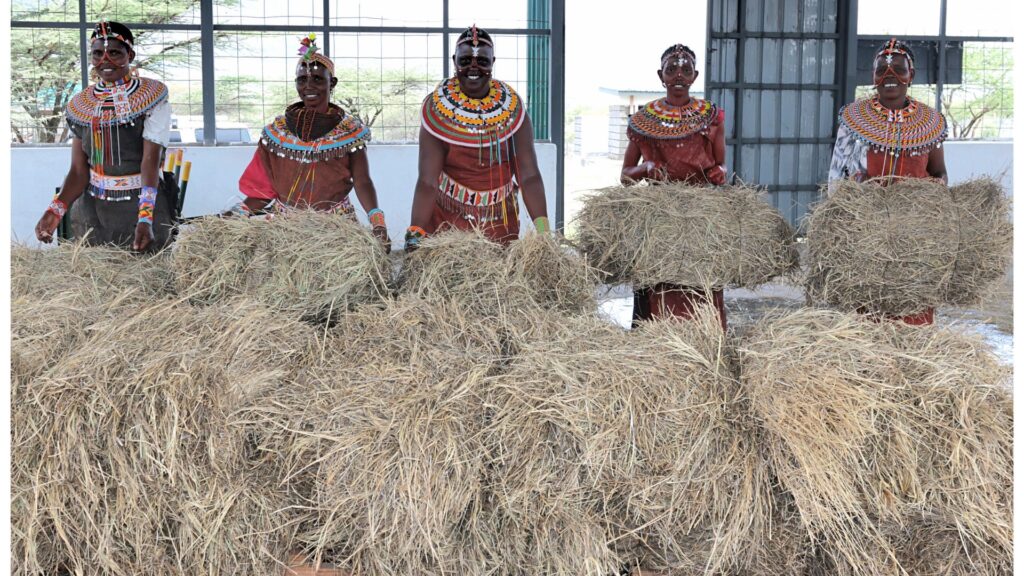
In Tum, drought is not an abstract risk. It arrives quietly and then takes everything at once. For many households, it begins with the loss of livestock and quickly turns into hunger, debt, and children dropping out of school. Agnes Lesilila remembers that moment clearly. “When the drought came, we lost all our livestock,” she says. “We really struggled. We had no food to eat, we could not afford to pay school fees to educate our children.”
What followed was a familiar pattern across pastoralist communities. Families walking long distances in search of pasture, carrying sacks across mountains to keep the few remaining animals alive. “We travelled across mountains with sacks on our backs to get grass for our remaining livestock,” Agnes explains. Survival meant reacting to the crisis, not preparing for it.
Under the Livelihoods and Inclusion for Transformation – Northern Kenya (LIFT-NK) program, that cycle began to shift. In Tum, fodder production became a pathway to shock preparedness, income, and environmental conservation rolled into one. “So when BOMA came, things became better,” Agnes says simply. “We got capital to start a business we can call our own, and we became self-reliant.”
The change was not just economic. Participants were trained on environmental stewardship and resource management, learning how their survival and the land were deeply connected. “We were trained about our environment, how to take care of it, save water, and stop cutting trees,” Agnes says. Cleaner cooking solutions were part of that shift as well. “BOMA brought us cooking stoves that we are now using.” Tree planting followed the same logic. “We were also trained on the benefits of planting trees, like getting fresh air and rain.”
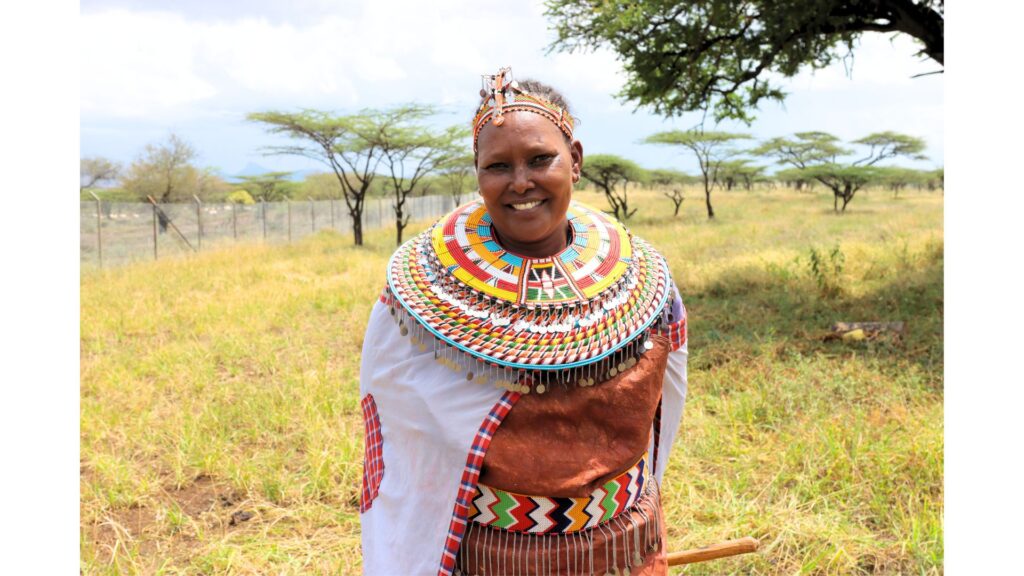
The idea for a fodder farm came directly from lived experience. After repeated droughts, community members approached the government with a practical request. “When the government came, we requested them to fence a space where we can plant grass to help us during drought,” Agnes explains. The goal was to store pasture for hard times and, if possible, sell grass to earn income during shocks.
That request aligned with Samburu County national government programming, alongside BOMA’s mentorship support. Ben Leshoe, a BOMA mentor, describes how linkages made the idea viable. “Through the mentorship that I was offering them, we managed to get linkages,” he says. “And we met with the national government program… Professionalized Fodder (ProFod).” Through this connection, participants formally joined fodder production as a shock preparedness strategy. “So that, when the drought season comes they’ll easily get pasture for their livestock,” Ben explains. “And also, they can sell the pasture that they have stored for the future so that they can get an income.”
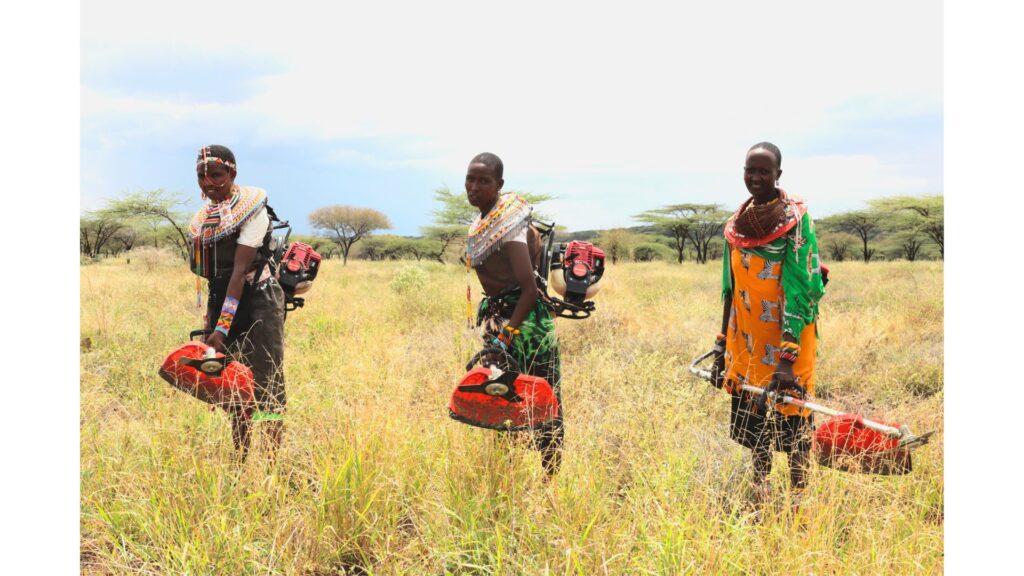
Support went beyond training. To reduce labor and free up time for other income activities, BOMA invested in equipment. “When our participants started fodder production, BOMA started to support them by buying brushing machines and boilers,” Ben says. “The brushing machines were four and ten boilers.” This mattered in a place where time is scarce and insecurity is real. “This was to help them make their work easy and to spend less time in the farm and help them to go do their other businesses in the other hours,” he adds, noting that “this area is known for conflict.”
The fodder farm also reshaped social dynamics in the community. Leotuno Lepadasa, one of the men supporting the women’s group, describes how the project challenged long-held assumptions. “When these plans for the farm were being made, a few elders from the community were selected,” he says. “They selected men and women to help support the program brought by BOMA.” What followed surprised many. “Through that men got to understand that women can also provide for the family and they can also work.”
Savings groups emerged alongside production. “Before they did not know anything about savings,” Leotuno explains. “They didn’t have savings groups before, but now they do.” Working alongside the women also changed his own perspective. “When we met on the farm with these women, I realized that through the training they got before us, they already knew what they were doing.” He describes learning directly from them. “They knew how to dig up half moons to trap water in the farm… Because when there is too much water, it can wash away the good soil on the farm.”
Security and cooperation became part of the model. “When we come with the women we provide security and also cut the grass for them as they package it and take it to the store,” Leotuno says. “We mainly provide security.” What emerges is a shared system of protection, production, and trust.
Tum itself was intentionally positioned as a learning site. Ben explains that “Tum is identified as a green location,” one of the areas receiving focused training on Natural Resource Management. The aim was long-term thinking. “So that our participants will know how to prevent or conserve the environment,” he says.“ Instead of causing destruction, they have to conserve.”
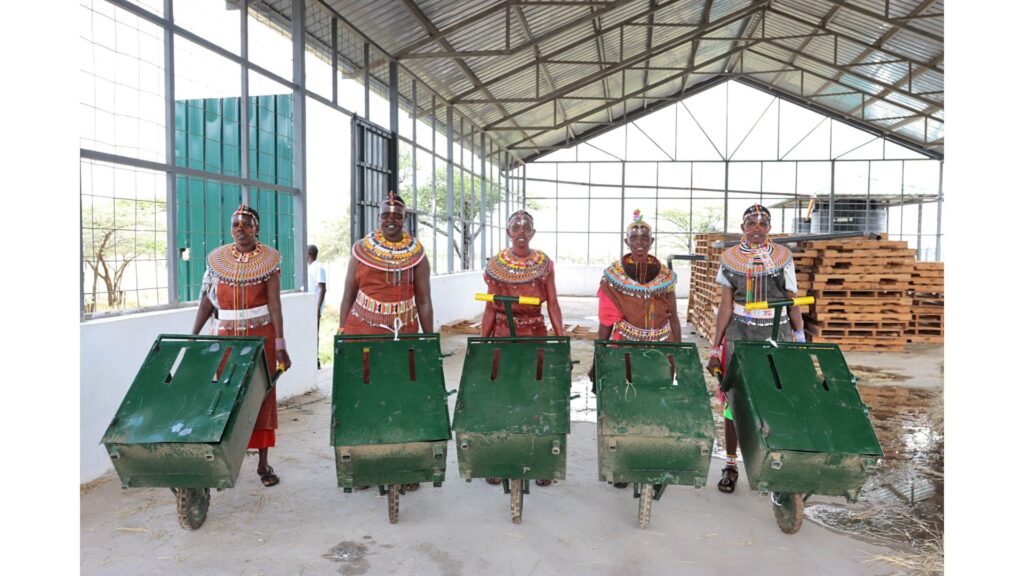
Agnes sees the difference clearly. “According to us, we have noticed a big difference,” she says. Governance and land access played a role. “There was no law before. People would just cut trees as they wish… we didn’t even know its meaning.” That changed when the government stepped in. “The government gave us 100 hectares of land,” she explains, “and they have supported the community and the participants to fence and build a store where we can store our pasture.” Production continues to grow. “And the participants have planted more seeds in the pasture farm.”
As the LIFT-NK program comes to a close, Agnes reflects on what remains. “As BOMA’s project comes to an end, even though we don’t want it to come to an end, it has already given us good fruit that we are still feeding on.” She is clear about sustainability. “We will continue running our business and helping ourselves.”
Her gratitude is direct and heartfelt. “I am very grateful to BOMA for this project. Thank you so much.” But like many participants, she looks beyond herself. “They have done a lot of work in our location, and they should continue with the same spirit and come back again.” Then she names the gap that still exists. “There are still more people back at home who have not been reached by BOMA. Only few were reached, and we would also love to see others get the same support.” Her closing words carry quiet weight. “Many have seen the light that BOMA has given us.”
In Tum, fodder is a buffer against drought, a source of income, a reason to conserve land, and a platform for women’s leadership. It is what happens when climate resilience is built from the ground up, shaped by lived experience, and strengthened through partnership.

