

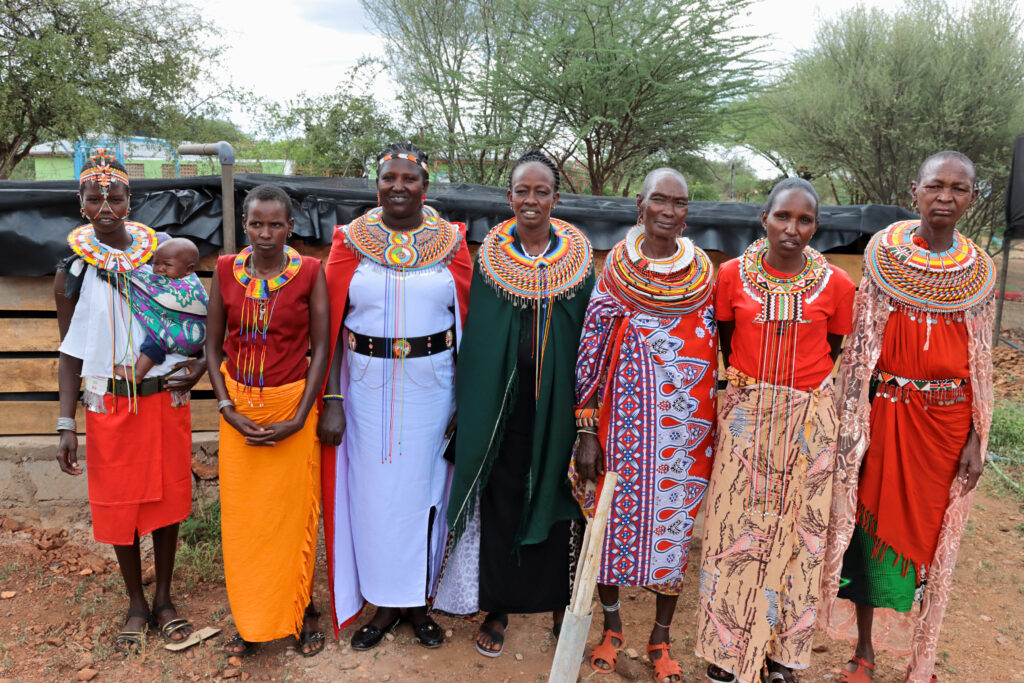
In Barsaloi, hunger used to be part of daily life. Not the dramatic kind, but the quiet kind that showed up in children falling sick often and families relying on the same limited foods day after day. For many households, meals revolved around ugali, milk, and meat when it was available. Vegetables were rare. Fish was almost unheard of.
Margret remembers that period clearly. “Before this LIFT-NK project came along, life was hard,” she says. “Many of us were struggling to feed our families. Children were being taken to hospital and given plump nuts because of malnutrition.”
Under the Livelihoods and Inclusion for Transformation – Northern Kenya (LIFT-NK) program, BOMA did not begin with money. It began with learning. Participants were trained on environmental conservation, nutrition, and the importance of eating a balanced diet. For Margret and her group, those lessons landed close to home. “We were trained on the importance of nutrition and eating a balanced diet,” she explains. “We realized fish would help us a lot because some people in our community are advised not to eat red meat.”
The idea to start a fish enterprise was not imposed. It came from the women themselves. Margret explains that there had once been a small fish project run by the local parish, but it had stalled due to lack of resources. “We decided to revive that project,” she says. “That’s how we settled on fish.”
With KES 30,000 in start-up capital from BOMA, the group made careful decisions. “We used the money to repair the pond and pay for water,” Margret explains. “It was not a lot of money, but we planned together.” Every step mattered because mistakes would be costly.
As the enterprise grew, so did the thinking behind it. BOMA supported the group to expand from one pond to several, and soon the women began noticing something important. “After changing the water from the fish ponds, people would come to fetch it and pour it on their vegetables,” Margret recalls. The reason was simple. “That water has nutrients.”
Instead of letting that resource go to waste, the group raised the idea with BOMA. “We asked BOMA to help us start a greenhouse,” Margret explains. With that support, the greenhouse was set up and the enterprise expanded further with two additional fish ponds. Fish water is now reused to grow kale and other vegetables, creating a simple but effective system where resources are cycled rather than wasted. It is a practical example of climate-smart production shaped by local observation and strengthened through targeted support.
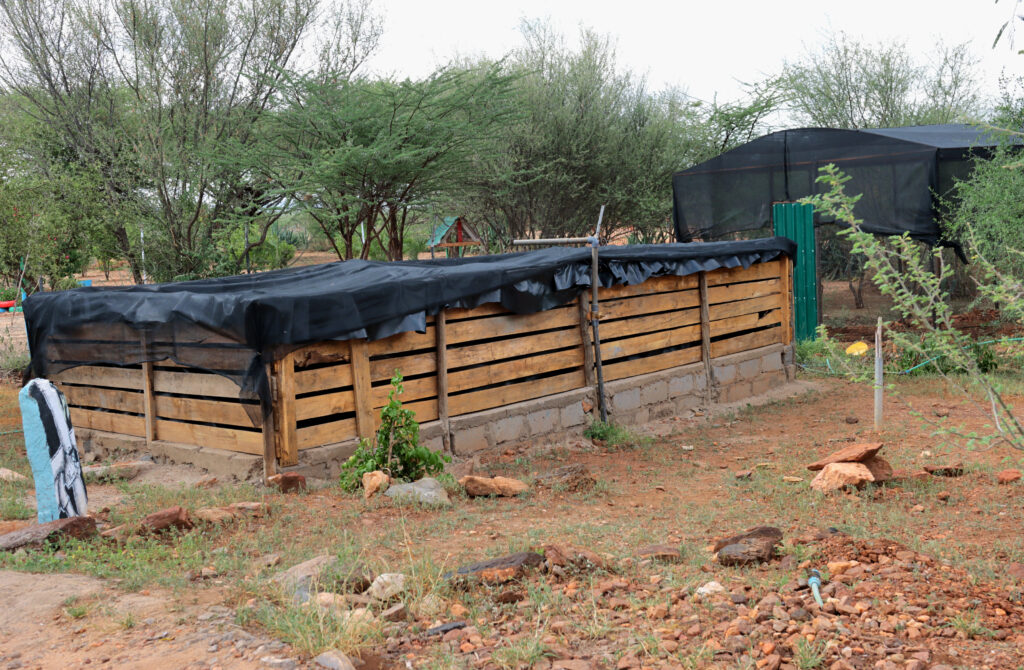
As the group continued learning, they identified another opportunity within the same system. The warm and humid conditions around the ponds proved ideal for Azolla, a free-floating aquatic fern. Initially, the women bred Azolla as feed for their fingerlings, but they quickly realized its wider value. “We saw that people with chickens were struggling to buy feed,” Margret explains. The group began drying the Azolla and packaging it for sale as poultry feed, turning a by-product into a secondary business.
Azolla is harvested weekly and made available for sale every five days, providing a cost-effective alternative to conventional animal feeds for local poultry keepers. Sold at Ksh.50 per kilogram, it responds directly to local demand, especially at a time when rising costs and inflation have made commercial feeds difficult to afford. What began as fish feed has now become an additional income stream for the group.
The impact on nutrition was immediate and deeply personal. “Before, we Samburu were only used to ugali, milk, and meat,” Margret says. “At least now we incorporate greens in our diet making it more balanced.” She explains that the change has gone beyond food availability. “Since we started consuming kale and vegetables, we have seen that our health and that of our children has changed.”
Fish became part of household diets first, with the women themselves becoming the business’s first customers. “We are the first customers,” Margret explains. “We buy fish from our own business and consume it at home, and then we sell the rest.” The group began selling fish in batches. “The first time we sold 120 fish,” she says. “Later we sold 230.” With the income earned, they reinvested back into the enterprise. “We bought 500 fingerlings,” she adds.
Agnetta, another member of the group, describes what that shift has meant for daily life. “Before, hunger was a big problem here,” she says. “Now we have food, and when we sell fish, we get money.” The group does not spend everything. “We save so that we can buy fish food and support the business,” she explains.
The journey has not been without challenges, and the women speak openly about what they have learned. Sourcing fingerlings has been one of the biggest hurdles. “We get fingerlings from Sagana,” Margret explains. “During transportation, some die because of lack of oxygen.” The group also experimented with organic fish feed. “We tried to use organic feed, but it did not work well. Some fish died,” she says plainly.Instead of giving up, they adjusted. “Now we buy proper fish food,” Margret explains. These experiences became lessons rather than failures, strengthening the group’s ability to adapt and make informed decisions.
Beyond income and nutrition, the project has changed how women see themselves. “I now know I can run a business,” Margret says. “Even when the project ends, we will continue.” Stella echoes that confidence. “The project is ending, but I will keep working,” she says. “We have learned a lot.”
The group is also clear about what still needs to happen. “There are many people in our community who are still struggling,” Margret says. “We were only a few who were reached.” Her request is simple. “We would like BOMA to continue and help others the way they helped us.”
In Barsaloi, fish has become a source of nutrition, income, and learning. Combined with vegetable farming and Azolla production, it shows what climate resilience looks like when it is built around real needs, local knowledge, and patient support. The ponds may be small, but the change they represent runs deep.

