Protecting Kirisia Forest While Building Climate-Resilient Livelihoods
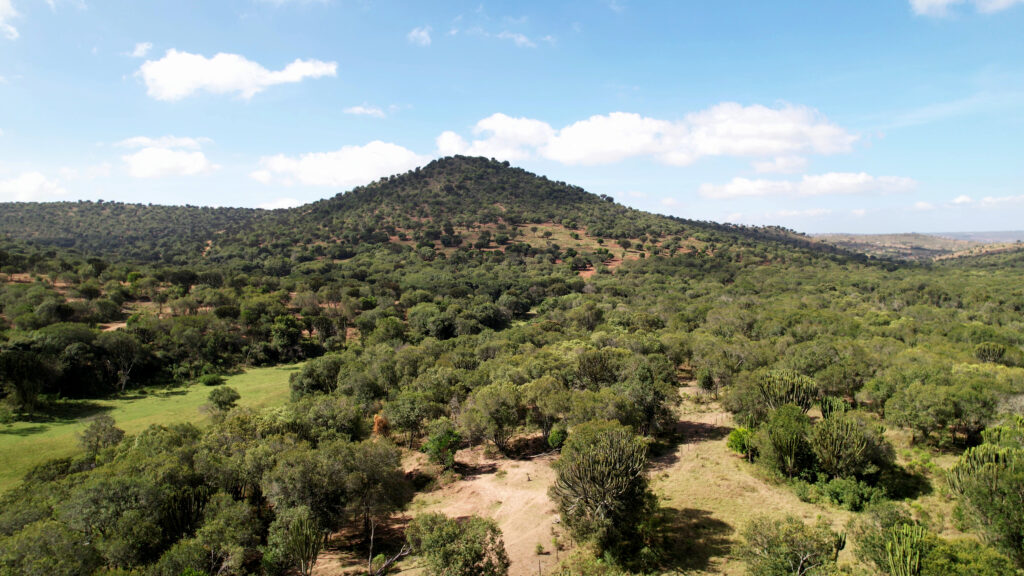
Kirisia Forest
The Livelihoods and Inclusion for Transformation – Northern Kenya (LIFT-NK) program, funded by the IKEA Foundation, set out to build climate resilience in places where poverty and environmental degradation often rise together. In Samburu’s Kirisia Forest, that goal became practical and personal. People here have relied on the forest for grazing, firewood, and income for years. As climate shocks intensify, that dependence becomes riskier for households and harder on the ecosystem. The story below brings together the voices of a Kenya Forest Service officer, a BOMA program manager, and three participants whose daily lives shifted in ways you can feel.
Lubanga Osango, the Kenya Forest Service officer in charge of Kirisia Forest under Maralal, starts with the reality on the ground. “This is a gazetted forest and it is about 91,900 hectares,” he says. Managing a forest of that size is not something enforcement can carry alone. It needs community ownership, clear agreements, and benefits that make protection worth it.
Osango explains that restoration under LIFT-NK focused on what can survive in Samburu’s conditions. “Under the LIFT-NK program, we had ear-marked 10 hectares… In this forest we planted 8,000 seedlings of croton because they do well here. The survival rate is 75%.” He links this directly to local climate patterns. “For Samburu North which is rain insufficient, we look for trees that can survive with minimal rainfall like croton… Even without rain the croton can survive a whole year without rain.”
He credits the local governance structure for reducing pressure on the forest. “Human activity does not pose a major challenge because we have a Community Forest Association… which is a legal entity,” he says, referring to the Community Forest Association (CFA) model that brings communities into co-management. “When they go for patrols they go together,” he adds, describing joint patrols by Kenya Forest Service officers and community scouts. His conclusion is blunt and true. “The key entry point is actually the community.”
But community ownership has to come with clarity, rights, and real incentives. Osango points to the Participatory Forest Management Plan (PFMP) as the foundation for that. “There’s a Participatory Forest Management plan (PFMP). Before the CFA sign any agreement, they have to be taken through the PFMP so that they know their rights,” he explains. In his view, that knowledge changes everything because it shows the community what they can legally benefit from and how.
Those benefits are already visible in Kirisia. “Right now, they already have two licenses,” he says. One is tied to a resource the forest has in abundance. “In this forest there’s a lot of sand… the sand gotten here is of good quality so they sell sand.” Another is linked to eco-tourism. “They have an eco-tourism site here. They got some visitors the other day during the camel derby and that is money.” He also explains how the revenue-sharing works. “We have an agreement with them so there’s a small percentage that goes to the Kenya Forest Service and the rest goes to them.” This is not a small detail. It is often the difference between conservation that feels like sacrifice and conservation that feels like opportunity. “The scouts work is voluntary and one cannot come here and go back home empty handed so they pay themselves,” Osango adds, describing a practical system that keeps protection meaningful for the people doing it.
David Kanda, BOMA’s Program Manager based in Maralal, describes a mindset change he witnessed over time. “Initially people saw issues of forests as something that only the government would manage,” he says. That changed as participants became active contributors. “I am super proud of the participation of Kenya Forest Service, our participants and the Community Forest Associations… The way our participants were involved in digging of the holes, ferrying of the trees from the nurseries to where we were planting was impressive.”
Kanda speaks about conservation as a habit, not an event. “The social and behavior change among our participants… participating in conservation at household level… those are the things that make me happy,” he says. He also places the work within Kenya’s broader climate agenda and international commitments. “Seeing that BOMA is a contributor to the Sustainable Development Goals on climate action,” he explains, “under LIFT-NK we contribute globally and also within our country given that we intend to plant 15 billion seedlings by 2032… Samburu county was supposed to plant 93,000 seedlings by 2032. Us contributing to that by planting 15,000 seedlings… in the forest and within the schools, we are aligning our intervention to the bigger picture of conservation.”
He is careful to point out that this work succeeds because of partnership. “BOMA cannot operate in silos,” he says. “Especially the Kenya Forest Service as the key persons… they were able to take us through on how to support aspects of conservation from the start.” The most effective climate resilience work is rarely a single-actor story. It looks like this: government technical leadership, community governance, and household-level livelihood change moving in the same direction.
That livelihood shift is clearest in the participants’ voices. For Margret, a member of the Nanyototo women’s group and part of the CFA, the story starts with what survival used to demand. “At the time we used to cut trees for charcoal,” she says. Then she describes what changed after she received support to start an enterprise. “We got the money… to start businesses, and we no longer interfere with the forest we are just doing business.”
Her words carry the weight of identity and confidence. “In the past I did not know anything… the only thing I knew was to cut trees, get charcoal and sell, but now I have a business.” She also points to practical knowledge that keeps the change durable. “Through BOMA I have learned how to plant trees… I know how to plant them, tend to them and even sell them later.” Then she makes a request that speaks to scale and unmet need. “There are many women who are yet to receive the kind of knowledge that we have. If possible, reach out to them so that we all take care of the forest and the environment together.”
Pamela Leboiyare, a CFA member from Naramat block and a BOMA participant, describes restoration as something you can see and measure without needing a technical briefing. “Before… there was no grass, trees had been cut down,” she says. “At least now… trees have grown, grass is all over, people no longer burn trees for charcoal.” She links the recovery directly to household resilience. “We have enough grass, these days our animals don’t die,” she says.
She also describes green value chains that make conservation economically attractive. “We have also been given an area here where we plant our tree nursery and we later sell the seedlings to the county government and other clients,” she explains. And she points to other forest-friendly livelihood streams. “In our group we also do bee keeping. There are many bees now and we get a lot of honey, sell it and get the money.”
Pamela’s story carries another layer that often gets lost in climate narratives: health and food. “In the past, we Samburu’s were only used to ugali, milk and meat. At least now we incorporate greens in our diet making it more balanced,” she says. Then she explains how the program’s push toward “green” enterprises became both nutrition and income. “We were told to involve ourselves in ‘green’ businesses and this is about growing kale, spinach, cabbages and since we started consuming them too, we have seen that our health and that of our children has changed,” she adds. “We have also been selling our vegetables and we get money.”
Her transformation is also about dignity and agency. “When BOMA came and gave us grants… I am now someone who is doing their own business.” Then she says what many communities say when something has worked and the need is still big. “I hope that they continue with this project so that they keep helping more people.”
Cleaner cooking solutions were a strong component of LIFT-NK, and Caroline’s story shows why this matters immediately at household level. “Before this program came, I was using charcoal,” she says. “We used to go to the forest, cut down trees, make charcoal out of them and cook.” She explains how adopting an improved cookstove changed her weekly reality. “In the past I would go to the forest almost thrice a week. Now that I have gotten this new stove I only go there once.” Then she makes the link to environmental protection in her own words. “Using less firewood also means that I take care of the environment.”
Caroline also speaks to safety in a way you cannot ignore. “Sometimes you would encounter the forest officers there… you would sometimes encounter an elephant and be forced to leave the charcoal there and run for your dear life,” she says. “This program has helped me. I no longer have to do that.”
She ties the environmental shift back to enterprise and financial tools. “We now run our own shop as a business group where we sell beadwork,” she says. “We took a loan from the Savings Group and started our own business to supplement the honey business.” And she ends with a simple, direct appeal grounded in the needs she sees around her. “Thank you so much for helping us and we hope that you will be back to help more women who have not yet received help.”
Osango reinforces why cleaner cooking is not a side issue for forest protection. “Cleaner cooking solutions are advantageous to us,” he says. “When the community uses this… they will not need a lot of firewood… organizations like BOMA bringing such solutions means we protect the forest.” He also speaks about the day-to-day reality of enforcement when poverty pushes people toward fuelwood sales. “This in turn means less arrests. We usually arrest and prosecute them,” he says. He has watched demand rise. “I went around with another organization to look at the adoption of cleaner stoves and the adoption rate of the cleaner cooking solutions is high… most of them were asking whether they could get more of the cleaner cooking stoves.”
For him, the next step is obvious and practical. “There’s need for policies for cleaner cooking solutions,” he says. “We need a lot of capacity building… the adoption rate is not actually low but we need to scale this up.”
Read the stories closely and the pattern repeats. When income becomes more stable, the forest gets a break. When the forest begins to recover, livelihoods become stronger. In Kirisia, restoration is showing up in seedling survival, in grass returning, and in legal community benefits tied to the Participatory Forest Management Plan. Livelihood change is showing up in women leaving charcoal behind, in tree nurseries and honey businesses, in vegetable farming that improves people’s health, and in cookstoves that cut fuelwood collection from three trips a week to one.
The clearest signal of impact is that people are not asking for sympathy. They are asking for more people to be included. Osango points to replication. “For regions that do not have CFAs, to form one… if a community owns up an activity, the success rate is high.” Margret wants other women reached: “If possible, reach out to them so that we all take care of the forest and the environment together.” Pamela adds, “I hope that they continue with this project so that they keep helping more people.” Caroline says it plainly: “We hope that you will be back to help more women who have not yet received help.”
What Kirisia shows is a practical route to climate resilience in fragile ecosystems: community rights clarified through Participatory Forest Management Plans, livelihoods strengthened through green enterprises and savings, and forest pressure reduced through cleaner cooking solutions. The foundation exists. The demand is already there. The work now is to take what is working and extend it to the households and institutions still waiting.